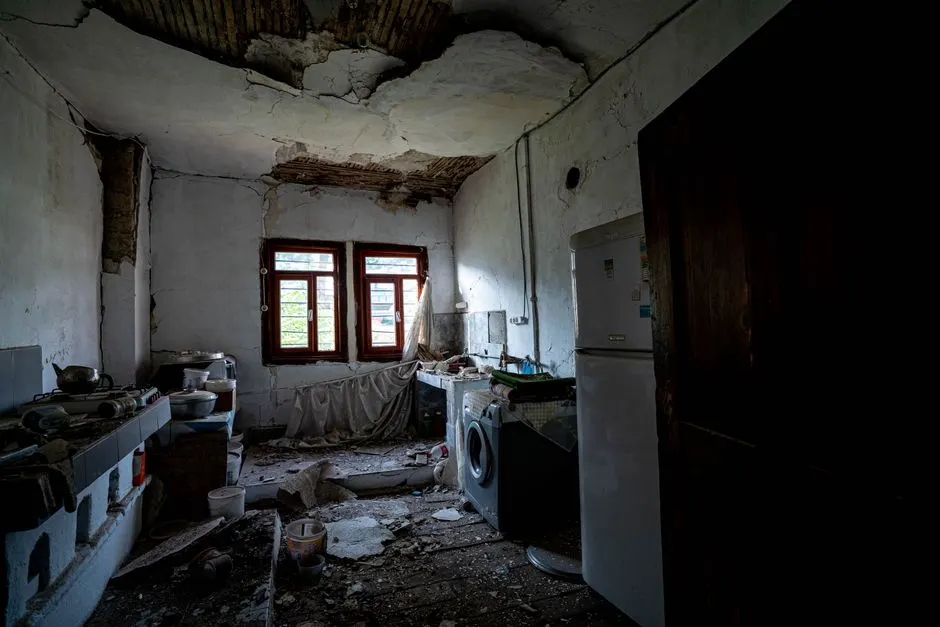
The earliest signs of hidden water damage in a kitchen are bubbling or peeling paint, a musty smell that won't go away, soft spots in the drywall, and unexplained increases in your water bill. If you notice any of these, water is likely running behind a wall or under a cabinet right now. This guide covers how to confirm the problem, what it costs to fix in Louisville, and when to bring in a professional before the damage spreads.
What are the first signs of hidden water damage in a kitchen?
The first signs of hidden water damage in a kitchen are usually cosmetic before they are structural: paint that bubbles or flakes near a sink or dishwasher, a faint musty odor that lingers after cleaning, and caulk that pulls away from the counter or backsplash. These clues show up weeks before a wall feels soft or a floor starts to cup.
Water travels along studs and joists, so the visible stain is rarely where the leak started. A small ring on the ceiling below an upstairs bathroom might actually trace back to a supply line behind your kitchen cabinets. That's why we tell homeowners to trust the pattern, not just the spot.
Here are the signs we see most often in Louisville kitchens:
- Bubbling or peeling paint on walls or ceilings near the sink, dishwasher, or refrigerator.
- A musty, earthy smell that returns within days of cleaning.
- Soft or spongy drywall when you press near the baseboard or under a cabinet.
- Warped or cupped flooring in front of the sink or dishwasher.
- Staining or discoloration on the wall behind the refrigerator or under the sink.
- A water bill that jumps 10-20% without a change in usage.
If two or more of these are present, assume there is an active leak and get it checked. The longer water sits inside a wall cavity, the more likely you are to find mold, rot, or damaged framing when the wall finally opens up.
Why Louisville kitchens are prone to hidden water damage
Louisville kitchens are prone to hidden water damage because of the city's aging housing stock, clay-heavy soil, and freeze-thaw winters that stress supply lines. Homes built before 1980 often have original galvanized or polybutylene plumbing that fails quietly inside wall cavities. Add a wet spring and a hard freeze in January, and small leaks become big ones fast.
We see a specific pattern in neighborhoods like the Highlands, Clifton, and Germantown: older homes with updated kitchens but original plumbing behind the walls. The cabinets look new, the countertops are quartz, and the supply lines are 60-year-old galvanized pipe. That mismatch is where hidden leaks hide.
Louisville also sits on soil with a high clay content, which means water drains slowly and puts constant pressure on foundations and slab penetrations. A slow leak under a kitchen sink doesn't just damage the cabinet base - it wicks into the subfloor and stays there. We've pulled up vinyl flooring in Portland and Shively that looked fine on top and was black with mold underneath.
If you're already planning to open walls for a renovation, it's worth having a Kitchen Renovation Contractor Louisville KY inspect the plumbing cavity while everything is exposed. Finding a leak during a planned remodel costs far less than finding it after the new cabinets are installed.
How to detect water damage behind kitchen walls
To detect water damage behind kitchen walls, start with a visual sweep and a moisture meter, then confirm with a thermal camera or a professional leak detection service. You can do the first two steps yourself in about 20 minutes with a $30 moisture meter from any hardware store.
Step 1: Check the usual suspects
Look under the sink, behind the refrigerator, around the dishwasher, and at the base of the backsplash. Run your hand along the bottom edge of the cabinet floor - if it feels soft or crumbles, water has been sitting there. Shine a flashlight into the gap between the cabinet and the wall; staining or white chalky residue means moisture has been wicking up.
Step 2: Use a moisture meter
Press the pins of a moisture meter into the drywall near the sink and dishwasher. Readings above 15% indicate moisture; above 20% means active water. Compare the reading to a dry wall in another room to get a baseline. If the meter spikes near a plumbing fixture, you've found the general area.
Step 3: Confirm with a thermal camera or pro
A thermal camera shows temperature differences behind the wall, which often reveals a slow leak that hasn't stained the paint yet. If you don't want to buy one, call a professional for Kitchen Remodeler Near Me Louisville KY service - we carry thermal imaging and moisture meters on every truck and can pinpoint the leak without tearing out the whole wall.
One more trick: shut off every faucet and appliance in the house, then watch your water meter for 10 minutes. If the dial moves, you have an active leak somewhere. That's the fastest way to know whether the problem is current or old.
Common mistakes homeowners make with kitchen leaks
The most common mistake homeowners make with kitchen leaks is painting over the stain and calling it fixed. Paint traps moisture in the drywall, which accelerates mold growth and hides the evidence until the wall fails. We've opened walls where three coats of paint were holding back a leak that had been running for months.
Other mistakes we see regularly:
- Ignoring a musty smell because there's no visible water. Smell is often the first sign of mold growing inside a wall cavity.
- Caulking over a gap at the backsplash without finding out why the caulk failed. New caulk will fail too if water is still getting behind it.
- Assuming a small stain is old. A moisture meter takes 30 seconds and tells you whether the leak is active.
- Waiting until the floor feels soft. By that point, the subfloor and joists may need replacement, which triples the repair cost.
If you're in an older home and you're not sure whether the stain is old or new, call for a Emergency Kitchen Remodeler Louisville KY inspection. We'd rather tell you it's nothing than have you find out the hard way.
How much does kitchen water damage repair cost in Louisville?
Kitchen water damage repair in Louisville costs $800-$3,500 for most hidden leaks, with the average around $1,800 in 2026. The low end covers drying, drywall repair, and repainting after a small supply-line leak. The high end includes cabinet replacement, subfloor repair, and mold remediation when the leak has been running for months.
Here's how the pricing breaks down for typical Louisville jobs:
- Leak detection and access: $250-$600, including opening and closing the wall.
- Drying and dehumidification: $400-$900 for a 3-5 day dry-out.
- Drywall and paint repair: $300-$800 depending on square footage.
- Cabinet base or toe-kick replacement: $500-$1,500.
- Subfloor repair: $600-$2,000 if the leak reached the joists.
- Mold remediation: $1,000-$3,000 for a contained kitchen area.
Insurance often covers sudden leaks but not long-term neglect. If you catch it early and document it, you have a much better shot at a claim. We work with homeowners across Kitchen Remodeler in Downtown Louisville and the surrounding neighborhoods, and we can tell you upfront whether the damage looks like a covered event.
One number worth remembering: every week you wait adds roughly 15-20% to the repair cost once mold sets in. A $600 drywall repair becomes a $2,500 remediation job fast.
When to call a professional for kitchen water damage
Call a professional when you find active moisture with a meter, when the drywall is soft, or when you smell mold and can't find the source. Those three situations mean the leak is inside the wall cavity, and no amount of caulk or paint will fix it.
We handle the whole job: find the leak, fix the plumbing, dry the cavity, repair the drywall, and put the kitchen back together. You don't need to coordinate a plumber, a drywall guy, and a painter - our team does all of it, and we test the repair before we close the wall.
If you're already planning a kitchen update, this is the moment to address it. A Kitchen Makeover Louisville KY is a smart way to open the walls, fix the hidden leak, and upgrade the finishes in one project instead of two. We've done this dozens of times in Louisville homes where the homeowner thought they just wanted new cabinets and found a slow leak behind the old ones.
One more thing: if you're in a condo or a home with a shared wall, call us before you call the HOA. We can document the moisture readings and give you a written report you can hand to the board or your insurance adjuster.
Frequently Asked Questions
What are signs of hidden water damage in my kitchen in Louisville KY?
The main signs are bubbling paint, a musty smell, soft drywall, warped flooring, and a water bill that jumps 10-20%. In Louisville's older homes, also check behind the refrigerator and under the sink for staining or white chalky residue.
Who fixes kitchen water damage in Louisville Kentucky?
A licensed kitchen remodeling contractor who handles leak detection, drying, and structural repair. Optima Torque does the full repair - plumbing, drywall, cabinets, and paint - so you deal with one crew instead of three.
How much does kitchen water damage repair cost in Louisville?
Most repairs run $800-$3,500 in 2026, with an average around $1,800. Small supply-line leaks cost less; subfloor damage or mold remediation pushes the number higher. Catching it early is the biggest cost saver.
Can water damage behind kitchen walls be fixed in Louisville KY?
Yes. We open the wall, fix the leak, dry the cavity, treat any mold, and repair the drywall and finishes. Most jobs are done in 3-7 days, depending on how long the leak was active and whether cabinets need replacement.
Get help with Kitchen Remodeler in Louisville
If you've spotted any of these signs, don't wait for the wall to fail. We'll find the leak, fix it, and restore your kitchen - usually within a week.
Call Optima Torque at (502) 631-9170 to schedule an inspection.